Gunner Maurice Naylor, CBE
"The information we were given by our officers was that the Japanese were poorly armed, badly equipped... they were travelling around in bicycles and just wore rubber boots..."
 |
This page: the fall of Singapore. |
 |
Captivity in Thailand. |
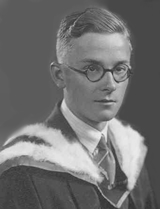
Maurice Naylor served in 53 Brigade of the 135th Field Regiment, 18th Division. He was captured by the Japanese following the surrender of Singapore and endured years in Japanese POW camps.
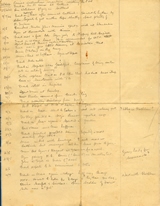
Soon after his release and return to Britain he wrote an account of his experiences using pencil diary notes made throughout his captivity, now held in the archives of the Second World War Experience Centre along with a waterproof pouch containing letters and cards sent to Maurice by his family.
A deluge of rain and a heaving sea greeted us when we stepped on deck on the morning of January 13, 1942. All that night and previous day we had been on the alert for submarines and enemy aircraft, but it was obvious that the present torrential rain would serve as an effective screen against air attacks. About nine o'clock the convoy split up - one part going to Keppel Harbour, Singapore, and we, on The Mount Vernon, proceeding to the Naval Base at the north end of the island. We docked about ten o'clock with the rain still cascading down. After a journey of 22,000 miles, lasting eleven weeks, we had at last arrived at our destination.
Disembarkation began immediately, and by 2pm the 135th Field Regiment, RA, were on the quay-side, soaked to the skin, clambering aboard trucks which were to take them to Nee Soon Cantonment. Preparations for our arrival were negligible, consisting merely of the erection of a number of tents in a rubber plantation in the cantonment. Soaked as we were, we set to, and diverted the numerous small streams running through the tents before they were in any degree habitable. At that time, as we cursed the rain, little did we know that ninety Jap planes had been over the approaches to Singapore, looking for our convoy which was so effectively screened by low clouds and pouring rain.
The next days were spent making feverish preparations to go into action; unloading stores and equipment: drawing guns and vehicles from ordnance, and overhauling signalling equipment. The Japs were advancing rapidly down Malaya, and we had to go into action as early as possible. The infantry of 53 Brigade went up on the 15th and by the 17th we were also ready. During this interim period we had our first unpleasant taste of pattern bombing, and it was woefully obvious we had no support at all. A(nti) A(ircraft) defences were useless against aircraft flying at such a height. The few Brewster Buffaloes left on the island were quite antiquated crates which soon disappeared. After leaving Singapore to go up country I never saw a friendly aircraft again until 1944 in Siam.
On January 18, "C" Troop went into action and took up coastal defence positions at Pontran Keckil in Jahore, about thirty five miles from Singapore. Meanwhile one officer and four other ranks, including myself, went to Kukup in order to occupy an island by the name of Pulu Pisang as a FOO to warn the mainland of the expected invasion of the Japs. Pulu Pisang was nine miles from the coast, and we maintained communications by helio and lamp; wireless was a failure. In the first days we had no means of retreat, when we were sent on this mission we were not expected to return.
The first attempt to reach this island on the night of the 18th ended in failure. The native driver of the small launch in which we set out either could not or would not take us to the island in the dark in spite of the threat of Lieut. Moser's revolver. After careering round the Straits of Malacca for over four hours, going aground on mud banks, and colliding with fishing traps, we eventually steered our way back to Kakup by means of the large fires blazing at Singapore, forty miles away. Lieut. Moser reported to the Commanding Officer of the Ghurkas, and we were told to leave first thing the following morning and occupy the island at all costs. Actually it was the following evening before we eventually arrived, together with a section of Ghurkas, and after bidding good-bye to the officer who had brought us over, we clambered up the 500 feet of the lighthouse, the top of which was to serve as an observation post and signalling station.
With an interval of two days, we remained there until January 29, waiting for the landing which never came, and listening to the rumble of guns coming nearer and nearer as our forces retreated down Malaya. From the lighthouse on a clear day we could survey fifty miles of coastline, and see across the Straits of Malacca to Sumatra. Several times we had alarms when unidentified craft appeared inshore and consequently we had practically no sleep. We had to keep up a constant watch and also maintain communications - no easy task for five men.
After the first three days we were joined by Units of the Royal Navy who, operating with shallow draught launches, took great risks in going inshore and evacuating troops cut off by the Japanese up country. We co-operated in this work and acted as liaison between the Army and Navy in making arrangements for evacuation. Altogether over 2,000 men were taken off by these means and sent to Singapore.
It was in one of these launches that we eventually escaped. On January 29, the situation was so serious on the mainland that a general withdrawal to Singapore island was ordered. On the night of the 29th we left Pulu Pisang, and apart from a hectic twenty minutes when we ran into a minefield; arrived without further incident at Keppel Harbour, Singapore, at 9.00 am the following morning.
When we arrived in Singapore everything was in confusion, nobody knew where different units were, and it took us two days before we at last contacted the Regiment. On the 1 February we arrived at "C" Troop Gun Position just off the Mandai Road. Our guns were covering the sector east of the causeway overlooking Johore Bahru. In the evening I went up to the OP to relieve the signaller there. Everything was quiet as the Japs had then occupied the town opposite. I spent the next day sending down fire orders - registering the guns - and fixing up telephones and an exchange. I was relieved in the evening and went back to the Gun Position to rest.
By the 3rd, Japs had been observed in Jahore and our guns fired intermittently all day. On the evening of the 4th I went up to the OP. Almost as soon as I arrived there, a gas alarm went but fortunately it was a false alarm. The OP had been heavily shelled that day and it was decided to move the OP to a wireless station further along the coast. The move took place that night. It was dark and we could see no light, and it was very difficult to move the telephones and exchange and install them in their new positions. However the job was completed by dawn and we sat down to await developments. They soon came. At 10 o'clock shells landed in front and behind us and we were soon receiving direct hits. The wireless station at first sight seemed to be constructed of steel and concrete, but to our dismay it turned out to be merely lath and plaster. Baulks of timber and plaster showered down on us and after about a dozen hits, and with the guns still firing Captain Crick decided to evacuate temporarily. Brown and I were detailed to make the first run for it. As we dashed out two shells landed within a few yards of me, and I was hurled to the ground and severely grazed my arms. However I had not been hit, and in a few seconds I had reached the shelter of the jungle. Several rounds followed us in, and as a plane was hovering around it was pretty obvious that the shoot out had to be controlled from the air. Soon after we had left, the firing increased and Captain Crick remained at the OP. Meanwhile Brown and I continued back to the gun position on foot as we had been ordered to do and reported the position.
I volunteered to go up again that night to clear the lines and everything was quiet then apart from the roaring of flames from an oil tank blazing nearby. I got back to the Gun Position early next morning after two nights without sleep. I slept all day and went up again at night to reel in lines at our first OP (Observation Point) which were no longer required. The following day, the 7th, was spent maintaining equipment. I received some mail, the first since leaving home, and sent a cable home.
The OP was moved again on the 7th, this time to the top of a hill a bit further away from the coast and on the 8th I went up there with Lieut. Gamble. During the night the coast was heavily shelled, fires blazed, and distress signals went up from the sector to the west of the causeway, held by the Australians. For some reason the Australians had withdrawn and the Japs landed practically unopposed. When dawn broke we could see many Jap invasion barges bringing troops across and although not in our sector, we opened fire with two guns and severely punished the enemy. We also fired on the causeway to prevent troops crossing.
We were relieved at 9am on the 9th and after reporting back to the command post, I went forward with Sgt. Edwards to reel in our lines to the coast. We contacted no Japanese though we were told by a Ghurka officer they were very close, apparently turning our left flank which the Australians had left unprotected. Guns were firing continually all morning, but when we arrived back at the Gun Position we were astonished to see the last gun out of action, and disappearing up the road. Reports had been received that the Japs were surrounding us and we were ordered to move immediately to a prepared position at Nee Soon.
We grabbed our kit, climbed on M2 and sped off down the road, rifles ready, with Jap planes flying low overhead. We arrived safely at Nee Soon but no sooner had we arrived then we were shelled again; we laid one line as quickly as possible, but almost immediately we were again ordered to pack up and we departed to Sembawang Aerodrome. Here we received orders to make a final stand, and fight to the last man, and we started digging feverishly. However in the confusion the orders were countermanded and we moved forward again into Nee Soon. It was now dusk and the Japs were believed to be actually in Nee Soon, but we got through safely and turned south for Singapore.
We had been in action for three weeks with practically no rest and we were feeling very tired, so that when we went into a hide, we dropped off to sleep at once and slept heavily until the morning.
We spent all the next day, the 10th, at this hide; our guns went into action for a short while and we were shelled occasionally and towards evening we moved up into Singapore itself and went into a cemetery. Up to this time we had believed we would be evacuated, and we envisaged another Dunkirk, but we now realised that there was no hope of this, and that we were doomed either to be killed or worse still, taken prisoner.
The final phases of the battle were now being enacted. The Japs occupied half the island, Singapore was blazing, and we were short of ammunition. Civilian casualties from bombing were mounting at an alarming rate. There was still, however, a determination to fight to the last and the next day fierce counter attacks by the infantry led to some of the bitterest fighting of the war on the Bukit Timah Golf Course.
During the night of the 10th/11th we were shelled in the cemetery, and we were very glad to move out next morning to our final position on the Bukit Timah road. It was a bad position and our guns were only able to fire in one direction; furthermore we could not get adequate personal protection as we reached water at 18 inches.
Our communications were continually being cut, and I was very busy on the wireless which seemed to work better here than in Malaya.
On the 11th and 12th we were bombed and shelled from time to time, and once we had to reload ammunition under shell fire with bombers roaring overhead.
The worst day of action was the 13th- Friday the 13th- and we were heavily shelled at night having four casualties. In spite of the shelling and bombing we were extraordinarily lucky as we had practically no casualties, though other troops around had many. The fact was that the enemy never really discovered our position and the shells we kept receiving were meant for a crossroads some 100 yards behind us.
On the 14th the Japs sent up an observation balloon and the shelling became more accurate. The fact that they could use such an obsolete method of observation showed the complete absence of air support. Jap planes flew around all day unhindered and as they knew all our movements and we knew none of theirs, we were severely handicapped. Added to this, observed shooting was almost impossible without planes because the trees obscured all enemy movements.
Towards dusk on the 14th some Indian troops panicked and for two hours shots were flying all around us until at last we managed to quieten things down. Nobody knew what was happening and we could get no information. About 8pm we received a wireless message that tanks had broken through about 1000 yards in front of us, and were coming down the road but nothing appeared, though we turned the guns up the road, preparing to fire over open sights.
The 15th started with the usual shelling at dawn, but nothing unusual happened until about 11 o'clock when we saw two cars going up the road towards the Japs, flying a Union Jack and a white flag. We were astounded as we realised it was all over, that we were going to capitulate.
All day rumours went flying around and about 4pm we were told to destroy our guns and equipment and cease fire. A final air raid took place at 6pm and we then moved back to the cemetery, an appropriate ending to the tragedy.
General Beckwith Smith in an Order of the Day to the 18th Division said that the Division had been thrown piece-meal into a battle that was already lost, against an enemy vastly superior in numbers and without air support or sea support. It never had the chance to prove itself as one of the finest trained divisions that had left England.
|
This page: the fall of Singapore. |
|
Captivity in Thailand. |