The Thai-Burma Railroad
"There was only one thing I wanted, and that was my family..."
 |
Overview, general conditions & personal experience. |
 |
Personal experience including health & medical conditions. |
 |
This page: personal experience including escape, punishment, 'Hell Ships'. |
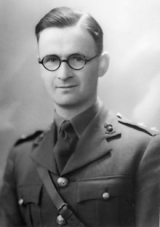
The escape of Jim Bradley, written of in Capt Silman's diary, is an incredible testament to the will and ability to survive under the most testing circumstances. As one of the five remaining men from the initially successful escape attempt, James Bradley was ultimately saved from execution by the intervention of Colonel Cyril Wild MBE who argued his case. James was born in 1911 and joined a Territorial anti-aircraft battery in Chester when he became aware that war was imminent. As he had a Cambridge engineering degree, James transferred to the Royal Engineers and was already married with a young son when he arrived in Singapore as part of the 18th Division. From Changi Gaol a party of seven thousand had to march 300 kilometres to work on the railroad. Almost one third of those who started the march were already unfit and had been removed from the hospital. The pressure for more workers at Sonkurai camp number 2 at the end of the march is described in James Bradley's memoir 'Towards the Setting Sun':
The Japanese engineers were our complete masters, and were in no way controlled by the Camp Commandants, who were mostly junior NCOs. It was a pitiful sight each morning, as we were handed over to the engineers for the day and, in some cases, half the night as well. The engineers demanded a certain quota of workers each day, and this number always exceeded those who were not actually in 'hospital', and thus they would literally drive out, with sticks or weapons, men who were almost incapable of walking. A man with something to show, such as a blood-covered bandage round his leg, had a better chance of being excused work than a man dying of dysentery or malaria, although in some cases the Japanese engineers would kick the wound dressing to see if he screamed in pain, before excusing him work for the day.
Having been diagnosed as a cholera carrier, James Bradley was ordered to move to an isolation camp nearby, with those already suffering from the disease. As the only officer, he was put in charge of organising the cremations, an experience which he has never been able to forget. The Japanese did not provide any food to those in the isolation camp, the only sustenance came from the working men who sent across some of their own meagre ration.
As James had sailing experience he was asked to join a planned escape attempt. The others involved in the escape were Capt Bill Anker, Capt Jack Feathers, and Lt J F Robinson, all of the RASC, together with Lt Ian Moffat, Lt Guy Machado, Lt T P D Jones, Cpl Brown and an Indian fisherman, Nur Mahommed. The escape party was led by Lt Col Mike Wilkinson, Jim's Company Commander, known as 'Wilkie'. It was estimated that the party would need to cover 80 kilometres and it would take around three weeks. The escapers hoped to reach Ye and then obtain a boat to sail westwards. Jim had spent ten days prior to the escape on 5 July 1943, cutting through the jungle to a small river to allow the party a head start on their pursuers. The escapers had accumulated about 70 pounds of rice, soya beans, dried fish, chillies and a few tins of fish.
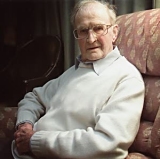
Early in the escape the party made reasonable progress, with two men cutting with parangs to open a track and another with a compass to hold them on course. At night they would make a shelter and try to keep a fire going. Unfortunately the escapers soon ran into denser jungle and steep terrain which left them exhausted and weak:
At night, I just lay thinking of the past, realizing what a happy life I had lived and how fortunate I had always been. Perhaps at the time, I had taken this for granted, but I knew now that I would never again accept anything as being my right. There was only one thing I wanted, and that was my family, with a small home, no matter how humble. This was my driving force.
Soon the men in the party started to become casualties. Firstly Cpl Brown, who had developed gangrenous tropical ulcers and who disappeared one night, having courageously decided not to hold up the others; secondly, Jack Feathers and then Wilkie, who had been suffering with severe pains around his heart. Lt Robinson and Lt Jones were to be lost shortly afterwards, leaving just five men to continue. By this point the escapers had been travelling for six weeks, the last two weeks without food. In mid August the five men arrived at the Ye River and struggled to build a raft, but it broke up in the fast-moving river. Fortunately two Burmese hunters came across the men and gave them some food. However their relief was short-lived as they were sold by the Headman of the village of Karni, back to the Japanese. After the war, the Headman was tried for war crimes and was arrested by Col Wild.
From the start, all the escapers were aware that their fate on recapture would most likely be execution. After a train journey to Moulmein the men were interrogated and then examined by a Sikh Doctor, Dr Sohan Singh who was appalled at their physical state. Jim Bradley by this point weighed less than six stones and Ian Moffat's leg ulcers were extremely serious. Dr Singh had no bandages but tore up turbans to bind Ian Moffat's legs. Then:
On 7th September we were moved to a Japanese camp where the four of us were made to sit in a line, cross-legged, with a bamboo pole lashed to our wrists behind our backs. The Japanese Captain tried to kick in Machado's teeth with the wooden clogs he was wearing and, being trussed so tightly, Machado was unable to take any avoiding action. Later that evening another officer ordered that we should be released and allowed to lie on the ground for the night, and we were given two rice balls each.
The following day the escapers were moved to Thanbyuzayat where they were told they would be executed. Some of the prisoners in the cholera isolation camp were ordered to cut wood for the escapers' bodies to be cremated after execution. These tactics were designed to demoralise other would-be escapers, a tactic which would be repeated at other camps in which Jim Bradley was held. It was never clear why the executions were not carried out, however Jim believes:
There is little doubt that we owe our lives to the efforts of all those senior British officers, who had been brought from various railway camps down the line up to Nieke to witness our execution, and in particular to Capt Cyril Wild, who spoke Japanese with such fluency that he was able to reduce Col Banno to tears by impressing on him the disgrace and shame that he would bring upon the Emperor and the Imperial Japanese Army if he allowed the execution of what he termed 'these brave men'.
Tragically, Col Wild lost his life in 1946 in an air accident when acting as a War Crimes Liaison Officer.
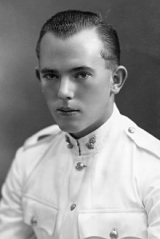
After 52 days in Outram Road Gaol, Jim was sent to Changi camp as he was in such poor health and was fainting almost every time he needed to stand up to collect his food. In desperation he had even tried to break his own arm. At his court martial in June 1944 he was sentenced to eight years' hard labour, yet the Presiding Judge told Jim to take care of his health and gave him a bag of sweets!
Post war Jim bought his own fruit farm and after the sad death of his wife Lindsay, he remarried and has a second family.
Another of those who had been initially held at Changi, was Maurice Cunningham, whose memoir 'Forever Yesterday' stresses how difficult it was for him, and so many others, on his return home:
As it was almost Christmas 1945 before I got home, I suppose as the Japanese War had ended in the August, this was why there was not much interest shown on our return. A volunteer car driver did take me to my sister's house and we were given 'travel tokens' to travel on buses in Birmingham. The conductresses were kind to us, they knew where we had been. I remember travelling to the city centre by tram and seeing a chap in uniform with a large white circle on his back on the same tram going to the city centre. I was astonished to be told that he was a German POW on his day out. I did find it difficult to adjust. I was 25 years old, I was 19 years old when I left England. I did not meet many of my old friends of the football team, most of them were married and settled down. As I travelled about I felt like a fish out of water. I even thought of signing on in the Army again. I eventually went for a Medical in February 1946, which consisted of a tap on the knee, testing reflexes, stethoscope on chest, then passed 'A1'. What a farce. When I filled in the form marking out the illnesses I had had the medical orderlies didn't know what they were. Later I went back to work at the firm I had gone to when I left school. This was a small firm only, one other chap in the same room. This was a mistake, as I found out afterwards. I needed to work in a large firm with plenty of workmates. It took two years or more for the effects of the 'POW' life to surface. I was just married and my wife must have had a terrible time. Sometimes I didn't go to work, I just walked for miles, sometimes around the area where I had lived before joining the Army. I used to wake and sit up in bed startled, then realising where I was, was a great relief.
I read recently a book by another POW of the Japs. He said his Doctor told him he should have some mental care, but he thought as we all did at the time, that this would be a stigma. I eventually had some 'ECT' treatment. Some time later I met another POW who I worked with and a friend of mine. He told me he had spent some time in a Mental Home, so I was not the only one.
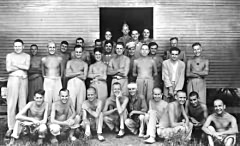
The outstanding memory of Maurice about his journey home, is the overwhelming kindness shown to him and his fellow POWs by the American sailors aboard the USS Block Island:
Those sailors were marvellous, they helped every way they could, transferring us to boats by harness, then taken to aircraft carrier where as we crawled up gangway steps they manned every step of the way to help us up. I remember as I neared the deck hearing a band playing welcoming us aboard, each one of us individually, I almost burst into tears. I had never felt like this before. I was determined not to cry, I don't know how I managed. All I knew the Americans were to us like mothers to babies, they were on guard all night manning steps to latrines to make sure we were OK. It was there I saw myself in a mirror and scared myself.
Maurice had arrived at Taichu camp on Formosa in October 1942 and was forced to help dig a river bed to prevent flooding in a nearby town. He then moved to Haito to dig stones to be used in constructing runways. In early 1945 Maurice marched to a new camp that was under construction:
The work here consisted of going further up the hill side and cutting the long grass needed to thatch the roofs of our huts, and carrying down trees that we used to build the framework and other uses. As some of the trees we carried down were fairly large in length and girth, some required 8 men to carry down the hill side, accompanied by Jap guards, screaming and pushing. We had to negotiate streams and other trees and bushes. Being the last of the POWs to be allotted a tree was tough. We had no help to pick up the tree. I recall two of us finally managing to lift a tree on to our shoulders, then a Jap guard pushing the tree so as to force us to run down the hill side. We dare not let our legs buckle and bearing in mind I weighed at that time 35 kilos, my work mate about the same, we were at our last gasp.
At this time quite a number of us were showing signs of madness. On a working party gathering long reeds, one American asked a Jap for a cigarette in exchange for a beating. He got punched all right, don't know about the fag! Another POW threw down his bundle, fell to his knees and with hands together lifted his eyes to heaven and prayed. The Jap guard laughed. At that time I didn't care what happened to me, whether I was bayoneted or not. I took my time over the work. I never felt like that before. I thought that if the war went on a few more months none of us would be left alive.
The Centre is also fortunate to hold the recollections of John Wyatt of the 2nd Battalion East Surrey Regiment, who reiterates the important point that for so many POWs the construction of the Thai-Burma railway was not the end of their nightmare in captivity. A number of 'Hell Ships' transported POWs to Japan to work, among them the Osaka Maru. Of the 750 POWs on board, 50 died before the ship hit rocks off the island of Formosa, weakened by disease and the horrendous conditions in the hold in which they were incarcerated. The POWs were transferred to the hold of the Hakusan Maru where the situation was even worse:
There was no air, it was overcrowded and the heat was unbearable. We lay naked on the wooden shelves, the sweat was pouring from us. It was exhausting even to move. We fixed lines across, put our G-strings or any clothing we could find on them and pulled the strings to get some air. We took it in turn to do this from morning till night. We hardly spoke - it was too much of an effort. There was darkness all around except that there was one dimly lit bulb swaying in the corridor. There was nothing to do but just lay there sweating hour after hour, thirsty and hungry, watching that bulb swaying to and fro, to and fro... I was getting near breaking point. Every night two or three men died from exhaustion. Rumour was that we were nearing Japan. It must have been right for our convoy was attacked by American subs. I could hear guns and explosions on either side of the ship and, one night, the buzzer alarm went off and the ship shuddered from an explosion and then they closed the watertight doors. I stood up and looked through the porthole and I saw the sea just above it. There were 400 of us down that stinking hold. I heard somebody say "We've been hit. Every man for himself". There was fighting, panic broke out, some POWs had to be held down by their mates. There was no air. I said to Mick "We're trapped". He said "Don't lose your nerve, just keep quiet and wait". When after about half-an-hour things started to calm down, the engines started to throb and we were on our way to Moji in Japan.
John Wyatt's job in Japan was to load pig iron into a big truck; both ends of the factory were open to the elements and at night he shared a hut with 300 POWs:
We had to lay side-by-side, head-to-toe, plus all your bits of sacking and mess tins. We were squashed like ants; no room to turn or stretch; stinking feet in your face; the smell of wet clothing drying on bodies; urine from beri-beri patients; and dysentery was still rife. The Benjo (Jap word for lavatory) was outside. In the freezing temperatures men with dysentery had to trample over you to get to the ladder; some couldn't make it, leaving excreta everywhere. Eventually, all dysentery cases were put on the lower platform. To all that was added the misery of bed bugs and lice. After a hard day's work, you could get no rest or sleep.
The Japanese civilians too, endured the ever-present threat of starvation and brutal treatment:
The Kempetai (Japanese secret police) used to watch us going to work. One morning we were straggling and some civilians broke through our ranks. It was about 7am when suddenly the Kempetai shouted at them, beat them about the face and made them stand to attention. They were still there when we got back from work at 6pm.
After a night raid by the American forces on Osaka, the factory was destroyed and John Wyatt was transported to a camp of American POWs, who were forced to unload cargoes of cement and bombs from ships. As a POW in Japan, John Wyatt suffered a bout of pneumonia and then yellow jaundice. His description of what it meant to him to be finally released is very powerful:
People ask me what it was like to be free. I could not explain, there are no words, only you know how you feel, after being deprived of the things we take for granted. Just think to yourself, water is there at the turn of the tap, bread, butter, beans, milk, eggs, a cup of tea, an aspirin. Deprive yourself of them for even two or three weeks, plus starvation, bashings and all the deadly disease. And, above all, your freedom to walk, talk and do what you like, when and where you like. That is what freedom means.
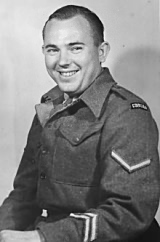
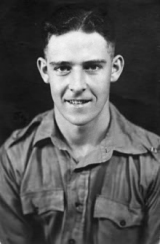
Sydney Burrow joined the Signals section of the 4/5 battalion Royal Scots Fusiliers and then transferred to the Royal Signals. He was born in November 1917, the youngest of eight children and was brought up by his elder sister, Nellie.
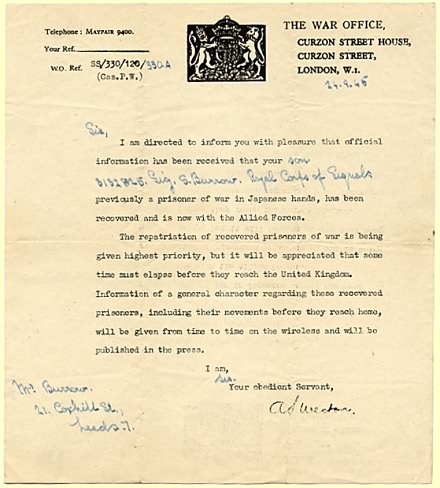
Letter from War Office to the family of Sydney Burrow advising them
of his safety
|
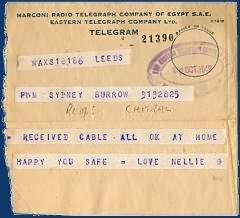
Telegram to S Burrow from his sister Nellie |
The remaining passage is from the Foreword to Jim Bradley's memoir 'Towards the Setting Sun' and written by his wife Lindy, who is in the best position to assess how his experiences affected Jim postwar:
In 1945 Lady Louis Mountbatten asked Jim to write a book about the escape, but out of respect for the feelings of the widows and families of those who had died such terrible deaths, he would not do it at that time... Ever since he returned home in 1945 he has been unable to speak of his appalling experiences, and it has all been 'bottled up' inside him, plaguing him relentlessly with nightmares. All he wanted to do was try and forget, and it took a great deal of persuasion on my part to convince him that his remarkable story should be recorded for posterity. Bringing the memories to the forefront of his mind was an ordeal for him, but now that it is done, he feels that a great weight has been lifted from his shoulders...
For Jim there is no mental escape. However, he bears no malice towards the Japanese people, insisting that one must look to the future with friendship and mutual understanding, and learn from the mistakes of the past. The young Japanese people of today must not feel guilty, nor must they take the blame for the actions of their fathers and grandfathers, and of course, it must be remembered that, traditionally, their sense of values was so different from our own. At the time of the Second World War they still felt that it was honourable to fight to the death and die in battle, and that it was a humiliating disgrace to be taken prisoner and held in captivity.
The building of the Thai-Burma railroad was a monumental task and one ultimately doomed to failure, for it became a target for Allied bombing, leading to more deaths among the POWs and Asian workers. The cemeteries and personal accounts serve to remind us at what human cost this great feat of engineering was completed.
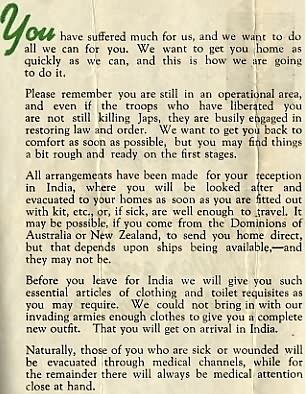
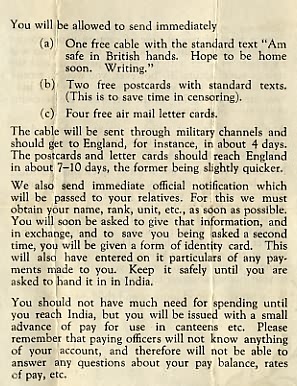
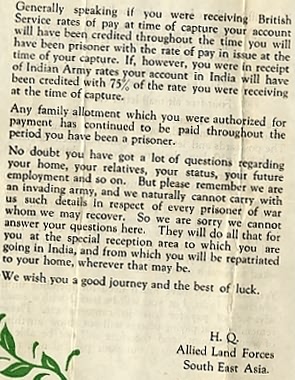
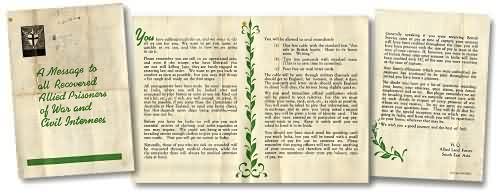
Leaflet from HQ Allied Land Forces S E Asia to FEPOWs (S Burrow)
|
|
Overview, general conditions & personal experience. |
|
Personal experience including health & medical conditions. |
|
This page: personal experience including escape, punishment, 'Hell Ships'. |