The Thai-Burma Railroad
"Groans and cries are the only noises to break the silence"
 |
Overview, general conditions & personal experience. |
 |
This page: personal experience including health & medical conditions. |
 |
Personal experience including escape, punishment, 'Hell Ships'. |
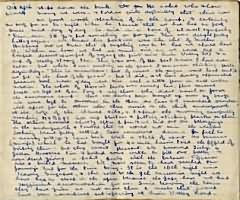
David Rintoul was born in Ardrossan, Scotland and studied for a Natural Sciences degree at Kings College, Cambridge before joining ICI in Singapore in 1937. Captured in Singapore David Rintoul suffered a terrible journey by rail before reaching Ban Pong camp, where he described the conditions he discovered in his diary:
October 16th
The RAMC are doing first class work under appalling difficulties. They have next to no materials. Dressings- back bandages, and lints have to be boiled and used again and again - a thoroughly unwholesome business in a place where every wound goes septic almost automatically. The doctor performed one bowel operation by the light of one electric torch and two hurricane lamps - unfortunately the patient only lived 12 hours, while the doctors contracted malaria from the mosquitoes attracted to the naked lights.
Such is the shortage of drinking water that we were told when filling our water bottles at 2.15 pm today that that water had to suffice till the end of tomorrow's march! The troops opposite us, who are not moving tomorrow, very decently offered to give us a drink from their bottles before we leave in the morning. For some reason Lawrie was made responsible by Lt Kayzan for reveille tomorrow at 5.30 am. When he suggested that the Jap guard be asked to call us, it was not approved. The officers for some reason still regard the Japs as some kind of ogre and are frightened stiff of them, when the Japs were finally asked to call us, they agreed with perfect good humour. This is no isolated case and causes a great deal of unnecessary discomfort.
October 18th
Marching with HQ at the head of the column we were soon greeted by Thais at the roadside offering us limes. Under normal circumstances one suck of a lime would make me screw up my face for a week - but we ate them gladly and found them marvellous thirst quenchers. Passing one group a small 6 year-old stood and looked proudly up as we passed and said "I am Christian". As we went on we realised the Thai's sympathy for us. They showered oranges and bananas and limes and small packets of salt on us.
October 27th
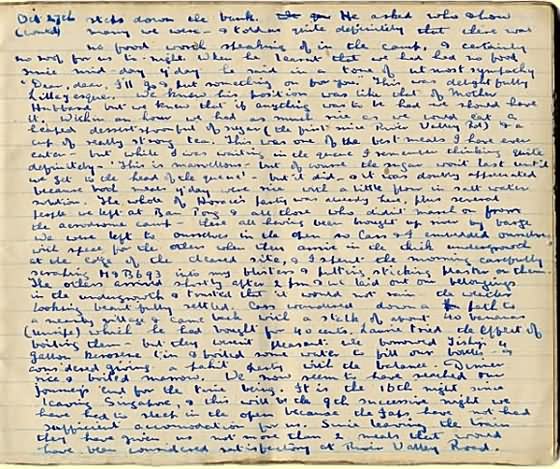
Reached our camp about 9 am. Before we could disembark Col Lilley appeared on the steps down the bank. He asked who and how many we were - and told us quite definitely that there was no food worth speaking of in the camp, and certainly no roof for us tonight. When he learnt that we had had no food since mid-day yesterday he said in a tone of utmost sympathy "Dear, dear, I'll go and put something on for you". This was delightfully Lilleyesque. We knew his position was like that of Mother Hubbard but we knew that if anything was to be had we should have it. Within an hour we had as much rice as we could eat, a heaped dessert spoonful of sugar (the first since River Valley Rd) and a cup of really strong tea. This was one of the best meals I have ever eaten - but while I was waiting in the queue I remember thinking quite definitely - "This is marvellous - but of course the sugar won't last until we get to the front of the queue - but it did - and it was doubly appreciated because both meals yesterday were plain rice with a little flour in salt water solution
Nov 5th
A young L Cpl in the Gordons died early this morning from dysentery after Dr Pavillard had done everything in his power for him, with next to no medical facilities. Apart from some quinine. I don't think the Japs have given us any medical equipment for this journey - we have had to depend entirely on what we have been able to scrape together ourselves.
Nov 8th
The Japs don't think we are working hard enough and demand that we dig 1 cu metre per man per day. Col Lilley is a great trier for getting conditions improved. This evening he was seen leading the Jap commandant out of his hut - showing him two water buffalo the other side of the river and saying "Look - that is meat!"
Nov 15th
In the evening the Jap officer in conversation with some of ours began to discuss the position that will arise "when Germany collapses". He quite definitely used the word 'when'. Such is our sickly state of news hunger that we are prepared to read a significance even into this sort of thing. The cookhouse has another pig on hand for tomorrow. Horace looked at it and said my idea of a reasonable sandwich now is that pig between a couple of medium sized bakeries. During the afternoon Richardson came across a green stick insect with long thin legs and a tubular body about 3 inches long and 1/8" diameter. He gazed at it in pity and murmured, "Poor devil - he's almost as thin as I am".
Volume 2. 1943
April 29th
The Jap emperor's birthday. Last year we had a Yasumi (rest day) in celebration, and a tin of pineapple. This year the Japs still keep our noses to the grindstone - they must certainly be wanting this railway finished. . .The Japanese were rather ruffled in the evening when they decided to have a full dress roll-call and really try to check our numbers - when they descended on the hospital we were short of 14 patients, who were roving free over various parts of the camp - we narrowly missed getting our faces smacked...
May 8th
The Japs are again complaining of our sick rate. Of 600 odd in our battalion (originally) only 180 are now working on the railway. They combed out the remaining people in this camp and sent 25 to the north camp this morning. The conditions at the north camp are bad - the place is full of flies, food inadequate, and work very hard - diarrhoea figures are up alarmingly - no room for more patients here so have had to establish a sick bay up there. At supper last night we had some fried dried meat, of unknown beast, and onions. It wasn't bad, but I don't think we can be considered fussy as the hospital dog wouldn't touch it - in spite of his normal omnivorous appetite. Yesterday I found a maggot in one of my boiled eggs - but it was only after I had eaten it that I wondered if I had been wise - no remarkable results noticeable as yet.
May 10th
Late last night the adjutant got a story that at a POW camp 60 kilos north there have been 22 deaths from cholera. How I hoped that we would be spared this. I feel that we can hold our own for a long time yet against anything the nips can do in the way of bad feeding and bad living conditions - filth and squalor, but cholera may strike down hundreds in no time. Dysentery, as I said before is not a pretty death - cholera must be a great deal worse.
July 7th
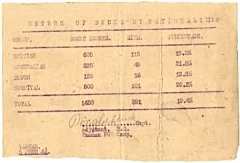
We are all desperately keen that our next move, which should take place in a few days - shall be southwards - and desperately afraid that we may go north for more work and more hardship on this damned railway - oh how sick of it we are - some men have aged years in the last few weeks. . . I am lucky to have the sanitary job inside camp and not have to go out to the track where the task has been increased to 1.8 metres of rock drilling per pair of men. Am a minor sick parade in myself although I have nothing serious enough to go sick about - or damp my optimism that there is a good time coming. I have a sore throat and tongue (pellagra?) - impetigo on my face - ring worm on my bottom - skin shedding on the scrotum - puffiness of the face due to beri-beri - and 16 septic wounds between my right knee and ankle - measuring one quarter to one inch diameter - and almost as many on my left!
(David Rintoul)
October 23rd
The other day the Nip medical sgt who insists on anything from 25 to 50 sick men doing work in camp in the morning petulantly asked of Lt Col Dunlop who is anything but Jap happy "Why so many sick men"? and showed signs of being truculent. Dunlop replied sharply, pointing at the graveyard "Why so many men dead?" - and the Nip said no more.
Nov 3rd
A party of sick native labourers being moved by river down south were put ashore here for the night - I saw about 50 coming up from the river - only about one third could walk without sticks and all the rest had inadequate dressings on the most ghastly ulcers. There was one elderly Chinese woman who progressed by taking a two handed grip of a stick and stopping after each pace to drag her basket of belongings after her. Ten others could not walk at all and moved on their hands, buttocks and heels - more appeared to have had to jettison all their belongings, one carried his rice bowl on his head. There was not a single smile out of the whole lot. They all looked like beaten dogs. I should like a moving picture of the whole scene simply as documentary evidence against these bestial fiends. Two Nip guards were present chivvying these wretches along and none too sympathetically.
June 4th
Last night the Japs decided to disperse the flock of young ducklings which they were keeping for their own benefit by giving 40 to each unit commander to keep. This was because of an outbreak of pneumonia on the flock.
June 5th
Now ducks is the sole conversation among hut commanders. They meet and discuss problems of duck housing and duck vital statistics. We have to tender figures every morning and evening of deaths , and the 'Tiger' is keeping a control set in case anyone's death rate appears excessive - at present his set has the highest death rate - presumably because the batmen over at his quarters are on our side.
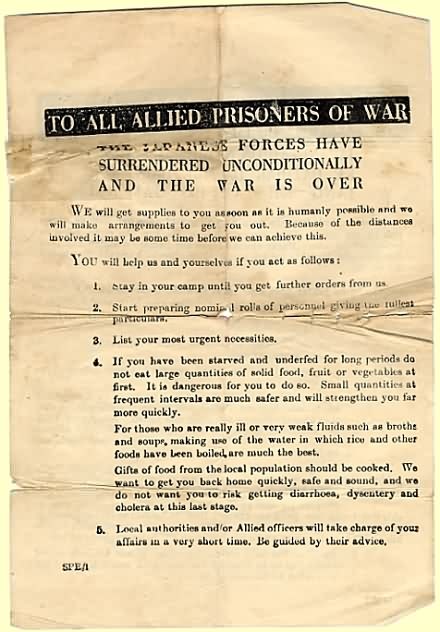
Some of the most poignant passages in David Rintoul's diaries concern the situation of the POWs after Japan's capitulation.
For three whole years, ever since we came in contact with Korean people, even the mildest people have been threatening what they would do to the first Korean they met when they heard they were free. And yet now they were treated with neither truculence nor surliness. Of course by this time the camp was seething with excitement and I began to wonder what the nips were going to do about the eight o'clock roll call and saluting formalities. By 7.10 pm the word had got round that Col Harvey and Major Corlett had said that the war was over and that we were free, but we were still afraid to believe it completely. Five minutes later our bugler played the English 'Fall-in' call. . . This was greeted by a terrific cheer, everyone rushed out of the huts onto the square. . . Then we sang "God save the King" with very large lumps in our throats - I noticed several people with tears on their cheeks and many more with ash white faces. Then the Dutch sang their anthem. We asked for the Americans to sing theirs - but only 3 out of 15 coming forward they decided they were too coy - so we gave them three cheers and the crowd broke up.
August 18th
What a joy to feel that life is so worth living that one shaves every day! On 17th I did a thing I hadn't done since Oct 1942, turned on a water tap. It ran dry before my water can was half full - but I had turned it on.
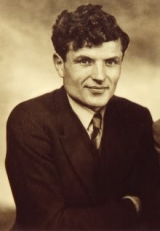
The Centre is honoured to hold two of David Rintoul's meticulously maintained and enthralling diaries, chronicling his experiences during captivity. An earlier diary was buried for safekeeping but David was unable to recover it later on. Post war, David Rintoul married June Landon in July 1946 but was tragically killed in an explosion at an open cast tin mine in Malaya in May 1949, just a week after his daughter was born.
Copyright of original diary and all quoted passages to Mrs J Wingate.
One of those involved in providing medical care in the camps was Capt Harry Silman, a Medical Officer with the 9th Northumberland Fusiliers. Born in December 1910, Capt Silman had already seen action in France, waiting two or three days to be evacuated from Dunkirk. During this wait Capt Silman delivered three babies in a café! After the capitulation of forces in Singapore, Harry was taken to Changi Gaol and from there he moved from camp to camp treating tropical diseases.
The Centre holds a typescript copy of Capt Silman's diary, which covers the period April to December 1943 when he marched with F Force upcountry.
Sunday, May 23rd
I am now seated in my own small portion of a leaky atap hut, during a storm in an unknown camp near the Burma border in northern Thailand. The journey from Changi to here almost defies description. It is a tale of hardship, suffering, hunger, thirst and disease, in conditions which could never have previously been imposed in a civilised society and which have taken their toll on the health of the men. Truth is stranger than fiction, and we have come up against conditions which would seem unbelievable in a novel.
We left Singapore and travelled for five days in a metal truck, 27 men to a truck. No room to stretch one's legs, and one meal a day. There were numerous cases of heatstroke and dysentery. It was impossible to take a man's temperature as the air in the trucks was about 103°. The floors of the trucks were filthy and oily. There was no way we could rest. Rice and stew covered with flies formed the main meal of the day. We reached Bampong, our first stop, which I think is about 70 miles from Bangkok, and we were told to leave all our heavy baggage at the station, and take what we could carry on our back, as we were to march to Thailand. Little did we realise then that over 200 miles would have to be covered, marching by night and snatching a little sleep by day when it wasn't raining. The officials at Bampong laughed at our pianos, lighting sets, etc. that we had been told to bring. We marched to the first rest camp where we were searched, numbered, pushed about, herded altogether in large huts. Numbers of men fainted on the short march after the exhausting rail journey...
Each night march covered about 15 to 20 miles. This may not sound much, but when only two thirds of the men are fit when leaving Changi, exhausted by a long, stifling train journey, having to carry all their kit on their backs, struggling through jungle paths and swamps, and often through tropical storms on very poor rations, with diarrhoea rife, struggling on night after night, with blistered feet, very few medical supplies - all these throw a different light on the picture...
I was medical officer in charge of my train party and marched at the tail end of the column which often straggled out for several hundred yards. Consequently, at a halt, I treated the stragglers and by the time I caught up with the main group, the halt was almost over. I had really the world's worst job of assisting the sick, lame and the weary, supporting them, carrying stretchers, helping with their kit, in spite of my own kit which I had to carry. The fifth night march took its toll of my health. I had been losing weight, had diarrhoea, and tenosynovitis of my tendo-achilles. My mental and physical condition can be imagined as I struggled on through a tropical storm, through water, swirling and rushing waist-high on two occasions. One of my shoes was torn off, so I discarded the other one and completed the journey barefooted. Every step was agony. I had never realised before what it meant to go through such a night of mental and physical torture.
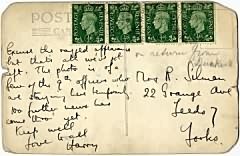
Reverse of the photograph of Capt Harry Silman (right)
|
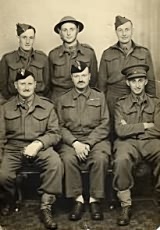
Capt Harry Silman (bottom row right), shortly after his evacuation
from Dunkirk 1940
|
On arrival at his camp Harry Silman tried to treat patients but little help or equipment was available:
May 30th
The position is going from bad to worse. There are over 100 cholera patients and there have been nearly 40 deaths. There are 18 bodies waiting to be buried today. Labour shortage for essential tasks in hospital is acute. We have no men to clean up the place or carry the food and fluids to the patients. Some cholera patients have waited 20 hours without a drink to be admitted. I have found that looking after the MI room and the hospital is really far too much for one MO, and so I am concentrating on the hospital.
I appointed a messing officer for the hospital to keep up the supply of fluids to the patients. It is tragic to see all the dehydrated patients lying for hours without a drink. The one bucket that the hospital possessed has been stolen.
HQ had a conference with the Nips this morning and tried to get a moratorium on the working parties building the railway until the illness peak has passed. I am afraid that HQ will get very little sympathy from the Japs as they are blinded by the God of Road and Railway. They will find out their mistake very soon when the number of fit men is decreasing daily to almost none at all...
June 3rd
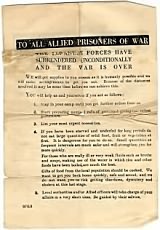
I have been over to the cholera centre. It looks like a scene from a film, completely unreal. There is a long, dark, atap hut, with over a hundred thin skeleton-like beings, writhing on the long platform, vomiting and passing motions where they lie. Groans and cries are the only noises to break the silence. Two or three orderlies with masks over their mouths were giving intravenous injections of saline, using Heath Robinson contraptions. About nine corpses lay outside covered with blankets and groundsheets, and a little distance away, the smoke of the pyre where the corpses are burning could be seen.
June 4th
Deaths have now topped the century - a hundred and six. There are a hundred and twenty cases in isolation, and about twenty awaiting admission. There were four deaths in my hospital amongst the waiting list. There was one death from diphtheria today. One feels so helpless. With these cases there are no antitoxins, just rest, and the men are choking to a slow and painful death.
July 6th
Great difficulty today in raising sufficient fit men for the daily working party, so the Japs went round the hospital picking out men they thought were fit and increased the number by 50. The MO's had the difficult task of sorting out the convalescent cases into fit and unfit.
Yesterday, a bombshell! When we got up we found that Col. Wilkinson, Robbie, Jack Feathers, Bill Anker, Jim Bradley and three other officers had slipped off during the night, and made a daring bid to escape. The Japs were very annoyed and created a hell of a flap. We were on a roll call parade for two hours and all closely questioned. Col. Banyo imposed a penalty of five days starvation on all the officers, and said that next time, Col. Hingston would be shot. Fortunately the ban on food was lifted for MO's and officers on working parties. Food was secretly slipped in to the others during the night.
Capt Silman did not add in his diary that he had given Jim Bradley some M & B 693 tablets from his small supply and had guessed that an escape was being planned.
|
Overview, general conditions & personal experience. |
|
This page: personal experience including health & medical conditions. |
|
Personal experience including escape, punishment, 'Hell Ships'. |